
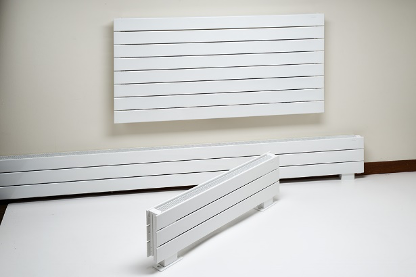
As homeowners and designers place greater focus on energy efficiency, one question comes up more often:
Are Runtal radiators more efficient?
In many cases, yes especially when paired with modern low-temperature hydronic systems.
When Runtal radiators first became popular in North America, they stood out for their clean European design, durability, and comfortable radiant heat. At the time, most heating systems were built around high water temperatures and inexpensive fuel, so efficiency wasn’t the primary concern. Many people chose Runtal simply because they looked better than traditional radiators.
What many didn’t realize was that Runtal radiators were originally engineered in Switzerland over 75 years ago for a very different type of heating system one designed around lower water temperatures, lower energy consumption, and greater comfort.
That approach is now becoming the standard in modern hydronic heating.
Today’s systems increasingly rely on high-efficiency boilers, air-to-water heat pumps, and low-temperature system design to reduce operating costs and energy use. This is exactly the environment Runtal radiators were designed for. Their large radiant surface area allows them to deliver comfortable heat at lower water temperatures than many conventional heat emitters.
Of course, efficiency is never about the radiator alone. True efficiency comes from how well the entire heating system works together. Runtal radiators support modern high-efficiency design by operating effectively at lower temperatures while delivering steady, even radiant heat.
Comfort is another major advantage. Instead of the sharp temperature swings common with many high-temperature systems, panel radiators provide quieter operation, more stable room temperatures, reduced drafts, and a more comfortable indoor environment overall.
Years ago, Runtal radiators were often chosen for their appearance. Today, they’re increasingly selected for what they were originally designed to provide: efficient, comfortable heating for modern low-temperature hydronic systems.